
Looking after your health, down there too
Talking about prostate health can feel a little awkward, and it’s easy to put off when you’re feeling fine. This Movember, let’s make that conversation a little easier.
Here’s a simple guide to understanding your risk, knowing what to look out for and talking to your GP about testing, with support available along the way.
What is prostate cancer?
Prostate cancer starts when cells in the prostate grow out of control. The prostate is a small gland, about the size of a walnut, that sits below your bladder. Some prostate cancers grow slowly. Others grow faster and can spread to other parts of the body. Early prostate cancer often has no noticeable symptoms.
What are the risk factors?
According to the 2026 Clinical Practice Guidelines for the Early Detection of Prostate Cancer in Australia, men aged 50 and over should speak to their doctor about prostate cancer testing.
If you're at higher risk, that drops to age 45. You're considered higher risk if:
· Prostate cancer runs in your family.
· You're a Black male with sub-Saharan African ancestry.
· You have a confirmed BRCA2 mutation.
Remember, you can talk to a doctor about your prostate health at any time. You don’t have to wait until you’re 45. And if you have any symptoms, don’t put off that visit to the doctor or your health care clinic.
What are some signs to look out for?
Early prostate cancer often has no symptoms, but if you notice any of the following changes, speak to your GP:
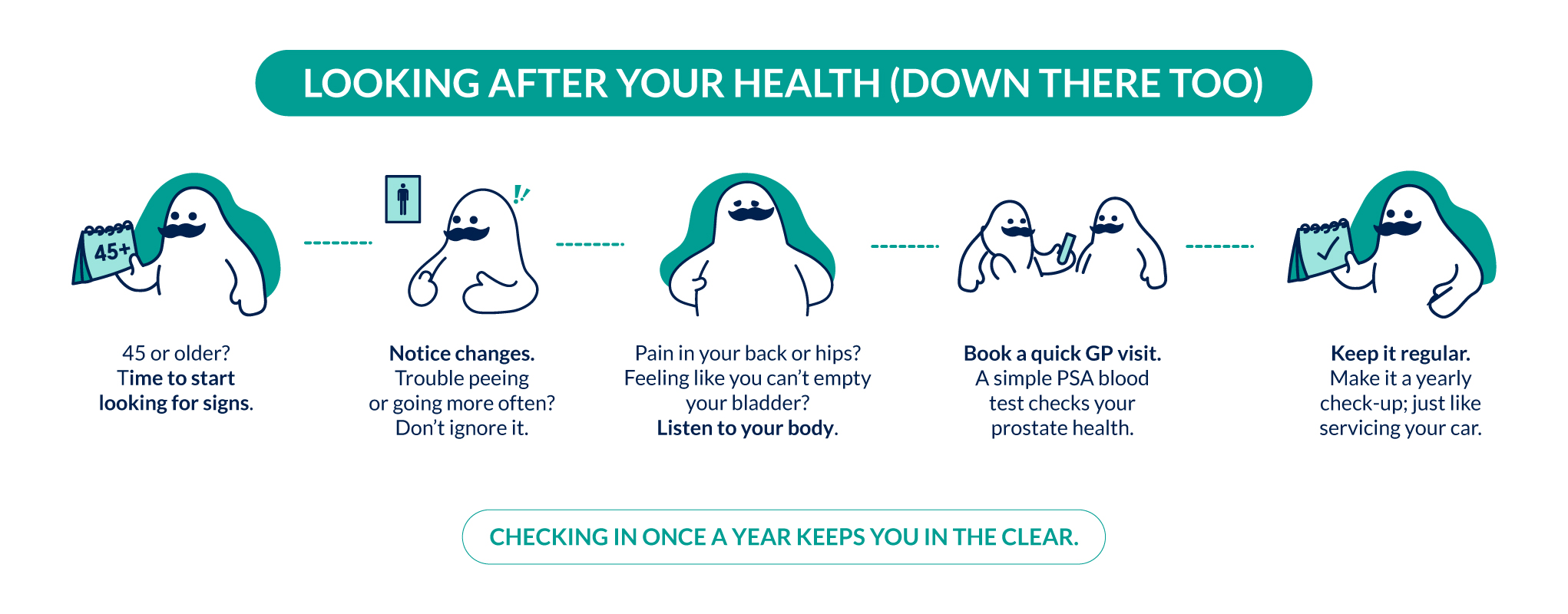
You’re running to the loo more often than usual (especially at night)
Trouble starting or stopping your stream
It feels like you can’t fully empty your bladder
Aches or pains in your lower back or hips
Blood in your pee or semen
These changes can have causes other than cancer, but it’s important to get them checked.
What happens when you see a doctor?
Your GP will ask about your health, family history and any changes you’ve noticed. Tell them about anything that concerns you, even if it feels awkward to bring up.
You can then talk through whether testing is right for you and what the results could mean. Tests you might discuss include:
· A PSA blood test. This measures a protein made by the prostate. A higher result does not always mean cancer, and the test cannot diagnose cancer on its own.
· If you need further checks, your GP will explain the next steps. These may include another blood test, seeing a specialist or having an MRI scan. Some people may need a biopsy, which checks small tissue samples for cancer.
Your prostate health at a glance
There’s a lot to take in, so here are a few simple things to keep in mind before your next chat with your GP.
Support and next steps
Read Matt’s story
Prostate cancer survivor Matt Starr shares his experience and why early detection matters to him. Read Matt’s story: Prostate cancer is not just an ‘old man’s disease’.
Join an Osara Health webinar
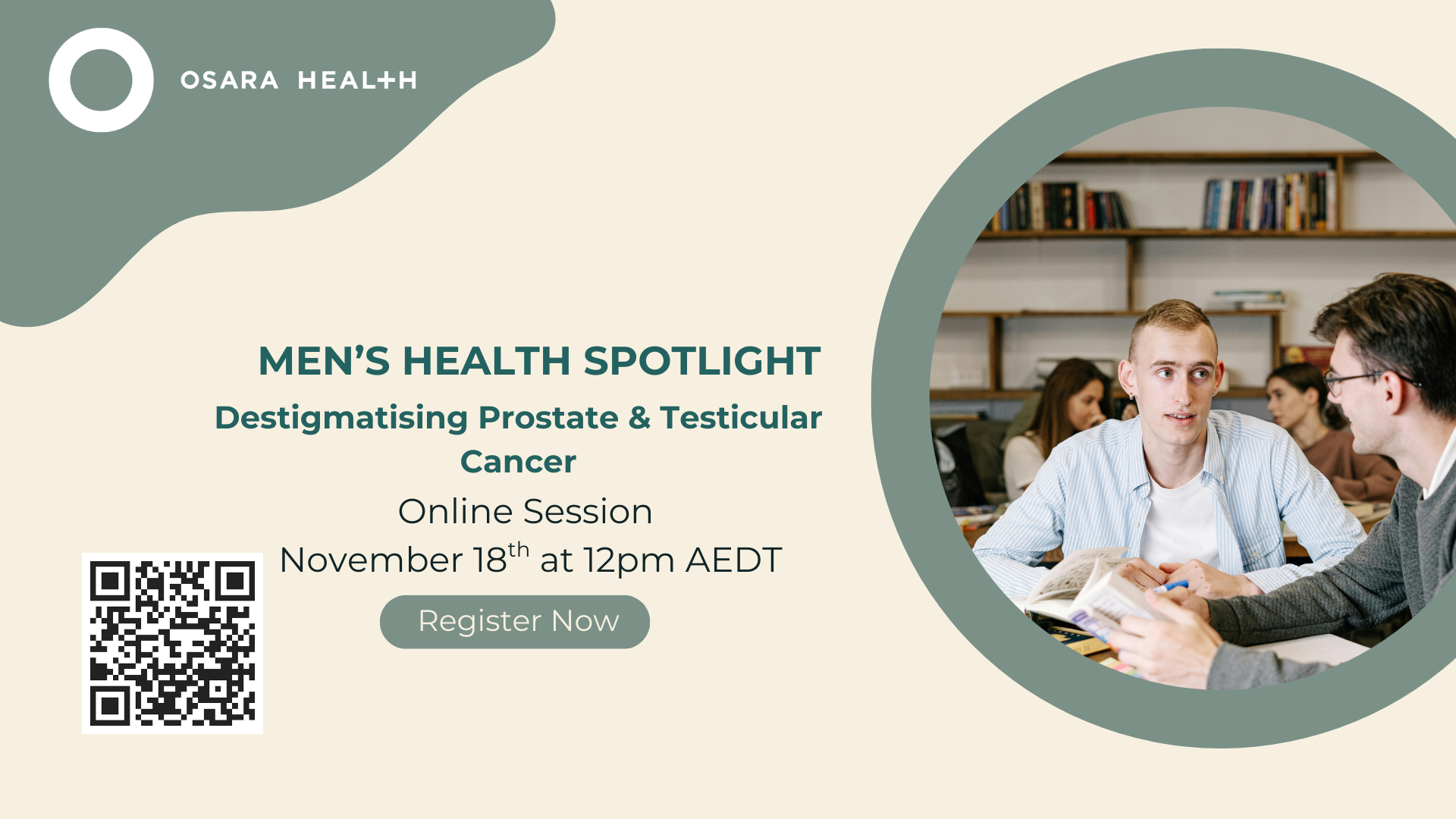
Join Men’s Health Spotlight: Destigmatising Prostate & Testicular Cancer to learn about risks, early signs and checks. The session will also explore ways to make conversations about men’s health easier at home and at work.
View webinar details and register here.
Cancer support through MyWellbeing
If you or someone in your family is affected by cancer, explore Cancer Support by Osara Health to learn about the support available.
References
Prostate cancer | Causes, Symptoms & Treatments | Cancer Council
Prostate cancer | Cancer Australia
Prostate Cancer Foundation of Australia | PCFA
Prostate cancer. Know your risk. Take action. - Movember
New prostate cancer guidelines in Australia: What they mean for you | Movember
New guidelines for the early detection of prostate cancer | PCFA